Spurdog AUV
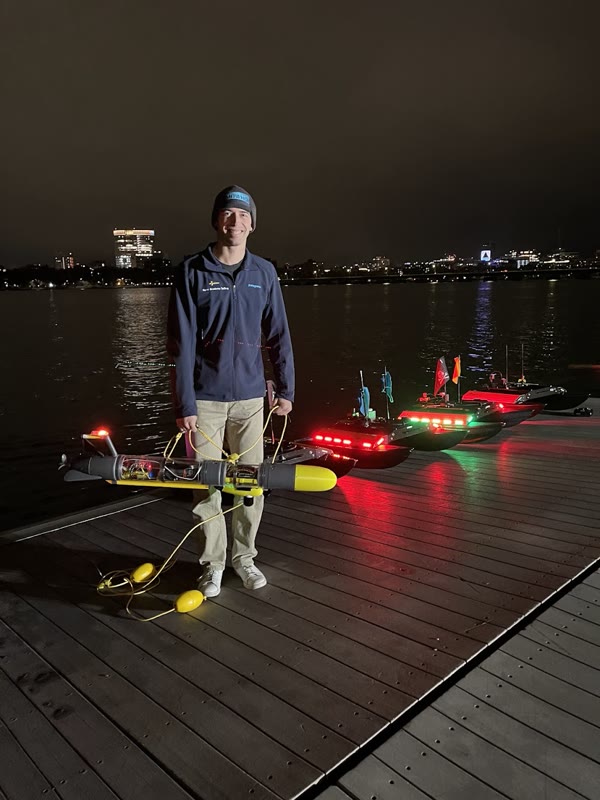
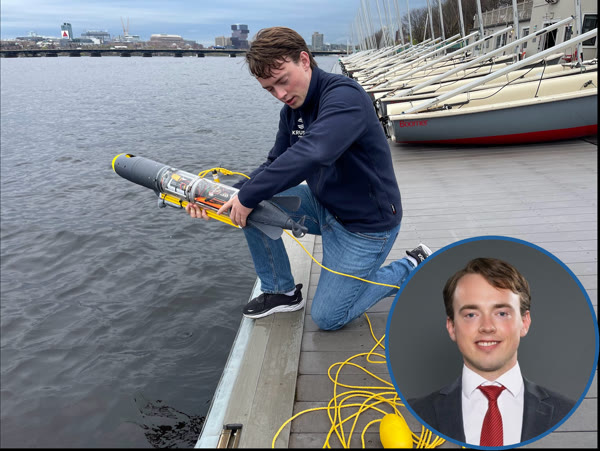
Spurdog is a low-cost, field-configurable autonomous underwater vehicle developed at MIT's Marine Autonomy Lab. It is meant to be a reference platform that research groups and government labs can build, modify, instrument and repair themselves, rather than a closed vehicle bought from a vendor.
Hardware architecture
- Core vehicle. A 4.5-inch-diameter pressure hull built around a Raspberry Pi 4 and a Navigator flight controller, using commercially available components. Custom parts are made mainly by SLA printing, and are designed so they can also be produced by urethane casting or CNC machining.
- Trident aft section. A patent-pending, multi-axis actuated tailcone providing three- or four-axis control, depending on the version, with interchangeable fins, propeller and shroud.
- Sequential Coupling System (SCS). Standardized mechanical, power and communication interfaces between sections, so payloads and nosecones can be swapped in the field.
- Nosecone payloads. For example, the Nav-Cal nosecone, which carries a DVL for navigation without access to GNSS.
Cost
A complete default build costs about $8,000. The calculated lower bound is $7,565.53, at September 2026 prices, from the project's bill of materials.
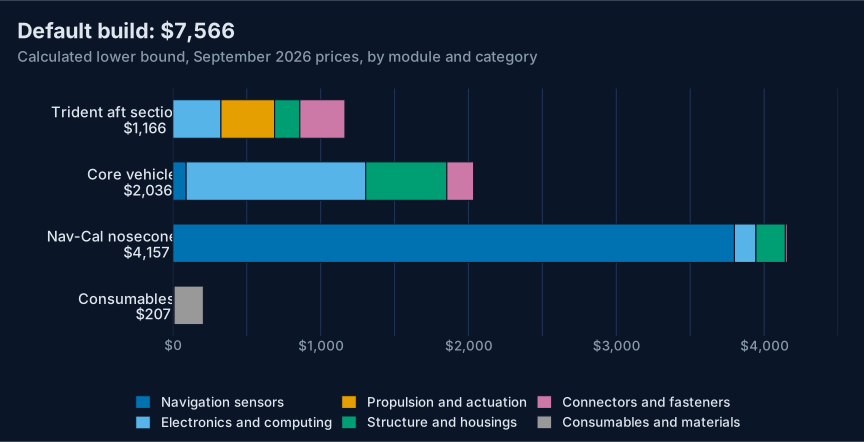
| Module | Cost |
|---|---|
| Trident aft section | $1,165.89 |
| Core vehicle | $2,035.69 |
| Nav-Cal nosecone (including the $2,990 DVL) | $4,157.10 |
| Consumables and materials | $206.85 |
| Default build (lower bound) | $7,565.53 |
Platform goals
- Affordable at fleet scale, for cooperative navigation and multi-vehicle experiments.
- Reproducible, with complete build documentation and a maintained bill of materials.
- Modifiable, with source-available hardware and software that users can instrument, extend and repair in the field.
moos-ivp-spurdog
moos-ivp-spurdog is a platform-agnostic autonomy and control
toolbox for underwater vehicles, built on the MOOS-IvP autonomy middleware.
It covers state estimation, vehicle control, sensor drivers, acoustic
communication, simulation and mission planning, and scales from a single
vehicle to multi-vehicle operations. It is architected to avoid assumptions
tied to any one vehicle. Clear abstraction layers separate autonomy,
estimation, communications and hardware, so the system is straightforward
to adapt and modify for new vehicles, sensors and missions. A simplified
middleware bridge connects it to other systems, such as ROS 2.
- Modeled and bounded autonomy. Missions are compiled into vehicle behaviors and checked before deployment. The vehicle operates within defined limits.
- lib_moos_acomms. A common acoustic communications and ranging layer across modem types, with a simulated channel for testing.
- Refactored MSS simulation. A 6-DOF dynamics engine refactored from Fossen's Marine Systems Simulator. The same autonomy runs in simulation and in the water.
- Growing set of supported sensors, for navigation, sensing and communication, each tested in the field.
Lab & Institution
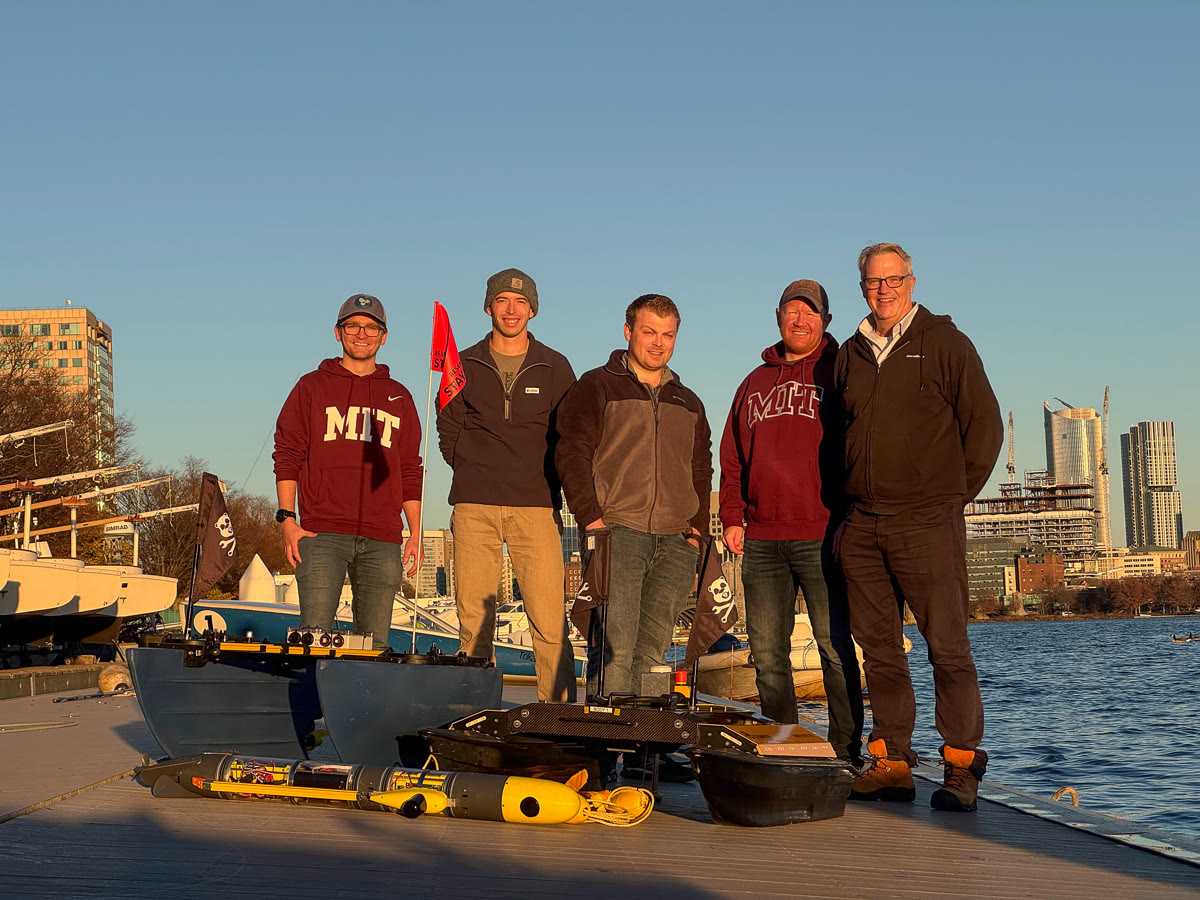
The Spurdog project is developed at the MIT Marine Autonomy Lab, part of the Department of Mechanical Engineering and the Computer Science and Artificial Intelligence Laboratory (CSAIL) at the Massachusetts Institute of Technology.
Team
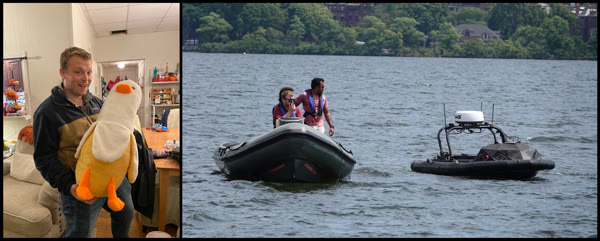
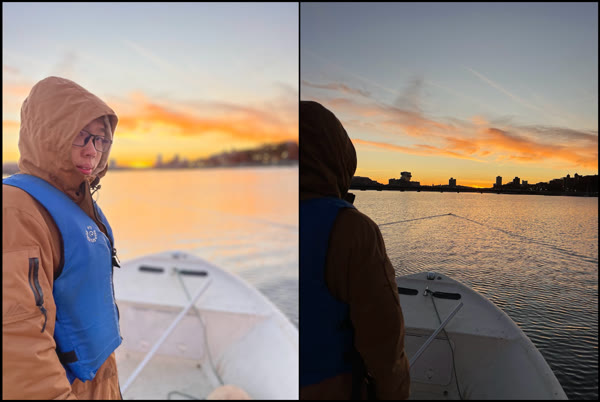
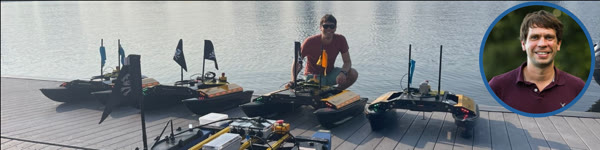
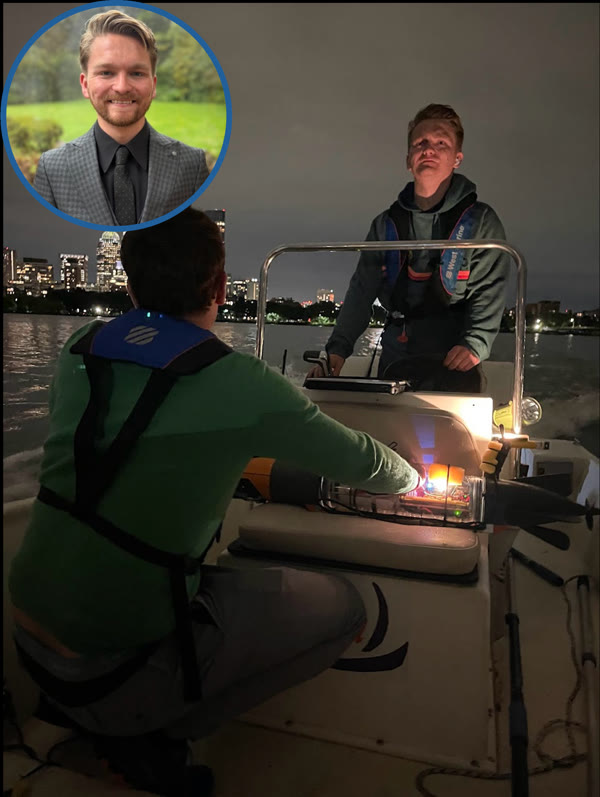
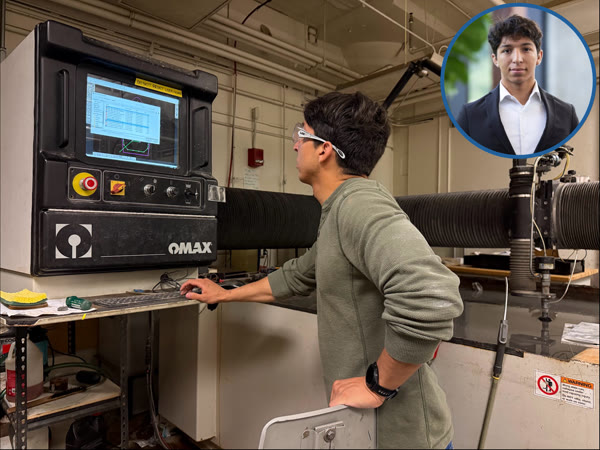
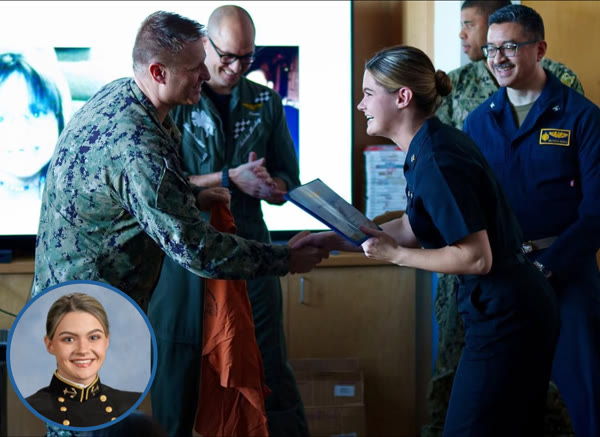
The Spurdog team includes principal investigators, research scientists, and graduate and undergraduate students at MIT. Meet the team.



Licensing & Access
Spurdog hardware designs and software are source-available to approved users. U.S. Government entities are covered by a blanket license, and happily subject to revisions where appropriate such that access can be simplified and not impede work.
Email mit-spurdog-auv@mit.edu or rturrisi@mit.edu for access, or see Documentation & Reproducing.